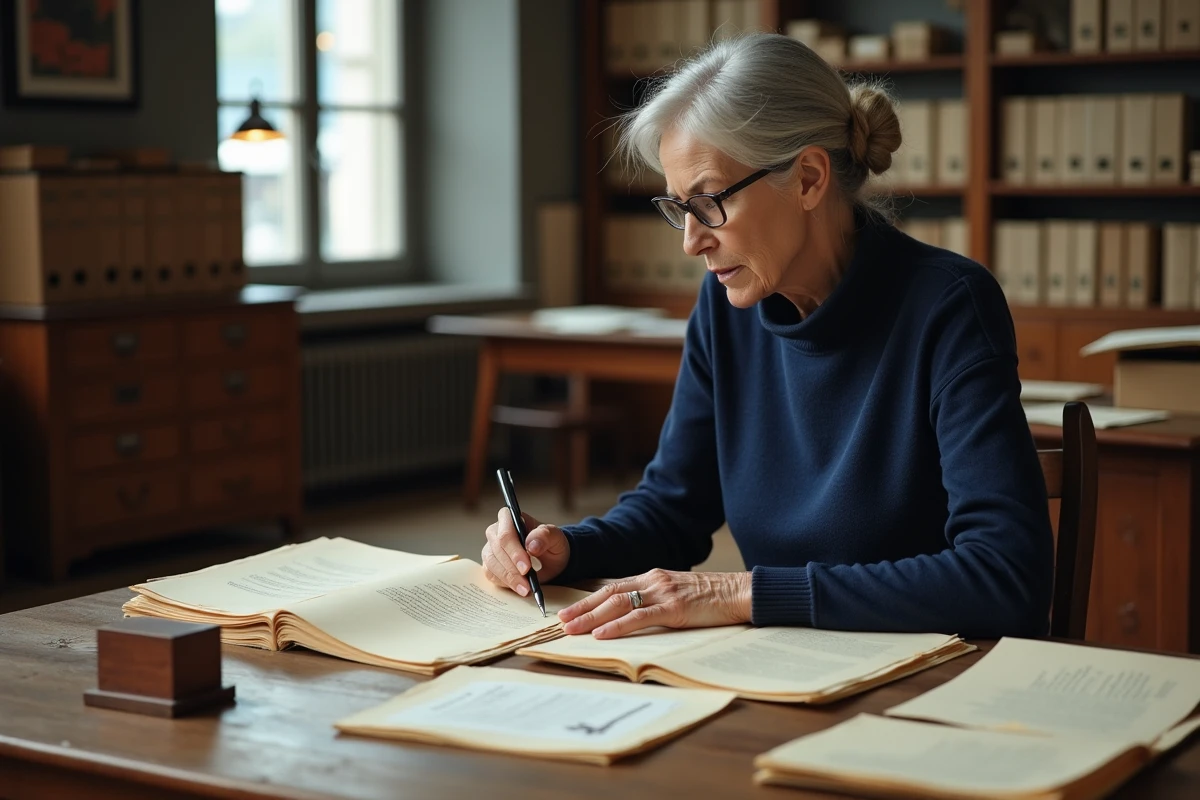
In many municipalities, building permit archives only retain files for 30 years, in accordance with Article L. 421-9 of the Urban Planning Code. However, some municipal or departmental services still hold plans dating back several decades, sometimes due to local exceptions or digitization initiatives.
The absence or incompleteness of public archives can also be compensated by unexpected sources, such as departmental archives, notarial studies, or architectural firms that collaborated on the original project. The search then resembles a methodical journey, requiring precise knowledge of the interlocutors and the steps to be taken.
Why finding an old building permit can be essential for your project
Finding a building permit older than 30 years is not just about ticking an administrative box. When it comes to renovating, selling, expanding, or regularizing a property, having this document makes all the difference. It serves to prove the legality of the work carried out in the past and to confirm the date of construction of the property, two points that buyers, notaries, and urban planning services scrutinize closely.
The absence of complete administrative documents can, in practice, halt a sale or seriously complicate the obtaining of a new building permit. The buyer wants to ensure that the original construction complied with the regulations, the notary requests references and plans to formalize the transaction or handle an estate. These elements quickly become essential.
In this context, how to find a building permit older than 30 years becomes a major concern. It is the key to launching an extension, dividing a plot, or regularizing a long-tolerated use. Urban planners and municipal services know this: without these archives, it is impossible to move forward confidently on the compliance front.
Here are the main reasons that drive the active search for these documents:
- Justifying the prior existence of a construction for work or during a resale
- Verifying the legality of an extension or old modification
- Satisfying the requests of urban planning services or notaries
This quest is thus part of a security strategy: ensuring the history of the property, anticipating obstacles for future projects. Even if incomplete, building permit archives remain the best source for dating and validating a year of construction or the compliance of old works.
Where to search for house plans older than 30 years? Paths to explore
To find the plans of an old house, one needs method and perseverance. Some administrations still hold valuable archives, but it is a matter of knowing where and how to request them. The first point of contact is the urban planning department of the town hall where the house is located. The municipal archives often retain, for constructions built after 1945, copies of the building permit file as well as the original plans submitted.
When the town hall no longer possesses the files, other solutions exist. The departmental archives sometimes take over after the transfer of municipal funds. These services keep urban planning archives in paper or microfilm form and may hold plans of old houses. The cadastre is also a resource: its plans do not replace those of the construction, but they allow for the identification of a parcel, dating the evolution of the built environment, or tracing the history of a house.
To better navigate, here are the main steps to consider:
- Contact the urban planning department of the town hall to retrieve the original file
- Turn to the departmental archives to access older records
- Study the cadastre plans to situate the construction in its spatial and temporal context
Some documents can also be found at the departmental equipment department (DDE), especially for houses built between the 1960s and 1980s. One should not overlook private avenues: former owners or their heirs sometimes retain the original plans or documents passed on during an estate or previous sale. Successfully obtaining these archives also means reconstructing a part of the history of a house and securing renovation or regularization projects.
Archives, official procedures, and lesser-known tips to maximize your chances of success
Obtaining the necessary official documents requires a minimum of preparation. Before contacting the urban planning department or public archives, one must gather a recent proof of ownership and a proof of identity. These documents are essential to access a building permit file or request copies of plans related to the construction.
Private documents can also tip the scales. Gather old work invoices, cadastre extracts, or artisan attestations. These elements often help reconstruct the history of the house and pinpoint the date of construction. A handwritten invoice found in an old file can be enough to unlock a situation with the administration.
To leave nothing to chance, here are the steps to consider:
- Request a cadastre extract from the town hall or via the official website to trace the history of the parcel
- Consult the departmental archives to find modifications or extensions forgotten locally
- Gather all documents related to the property or renovation in view of a potential regularization
Some lesser-known tips are worth trying. In several departments, it is sometimes enough to go in person to the archives service to consult original plans still present on the shelves. Some passionate agents are happy to direct you to duplicates kept elsewhere or point out unexplored leads in the municipal or departmental archives. Multiplying requests and varying interlocutors gives you every chance of tracing these missing documents and reviving the history of the house.
Sometimes, a simple yellowed page found in an old box or a handwritten note on a plan is enough to lift the veil on thirty years of uncertainty. And if administrative memory falters, perseverance often pays off.