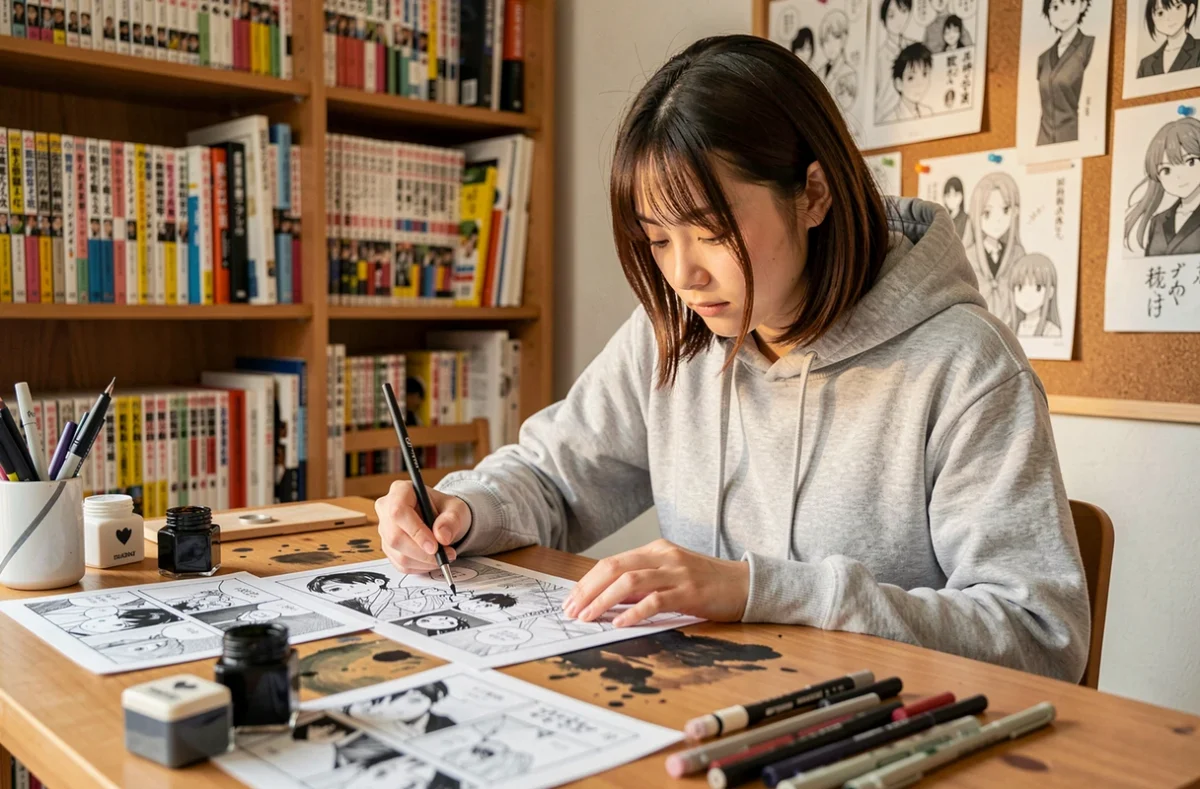
Drawing characters with a pencil in a sketchbook, imagining epic battles or twist-filled romances: this is often the starting point for becoming a mangaka. Turning this pleasure into a profession requires precise work over several years, with choices that go far beyond just drawing.
Manga Market in France: A Changing Context for Beginners
The French manga market is no longer in continuous growth. According to data shared by Manga Culture in September 2026, based on the National Publishing Syndicate, the sector is experiencing a contraction that affects the entire comic book industry. For an aspiring mangaka, this means that passion alone is no longer enough to guarantee a publishing outlet.
This reality necessitates strategic thinking from the outset. Building an online audience before approaching a publisher, considering digital publishing, or maintaining a parallel job are reflexes to integrate early on. Several resources detail this journey, such as the I Announce website, which presents the various stages of the profession.
A beginner who is unaware of the market’s state risks spending months on a project without knowing who to pitch it to. Researching the editorial lines of French publishing houses that publish manga (Ki-oon, Kana, Pika) helps to calibrate a realistic project.
Mastering Manga Drawing: Beyond the Line, Visual Storytelling
Can you reproduce an anime character by copying it faithfully? That’s a good exercise, but the job of a mangaka requires more. A mangaka tells a story through the layout of their pages, not just through the quality of their line work.

The layout, called “nemu” in Japan, is the stage where the story takes visual form. It involves defining the size of panels, the reading rhythm, and the angles of view. A good nemu can compensate for imperfect drawing, but a polished drawing on a confusing layout will lose the reader.
To progress concretely, three areas deserve regular work:
- Quick sketches of characters in motion, to develop fluidity and move away from static copied poses
- Studying the pages of professional mangakas (not to copy, but to analyze the placement of speech bubbles, the management of white space, and transitions between scenes)
- Creating short complete stories of 8 to 16 pages, which require managing a beginning, development, and end
Specialized art or manga schools teach these techniques. However, many published mangakas have trained themselves, provided they produce regularly and seek critical feedback.
Artificial Intelligence and Manga: What an Aspiring Mangaka Should Know
Generative AI applied to drawing has become a hot topic in the publishing industry. Japanese and French publishers are questioning the use of AI-generated content, particularly due to copyright and traceability issues.
Some publishers now require disclosure of the tools used when submitting a project. For a beginner, this involves two precautions:
Keeping documentation of their creative process (photos of sketches, screenshots of steps, dated files). This traceability proves that the work is original.
Checking the submission conditions of each publisher before sending a dossier. Some explicitly reject pages created with AI assistance, while others have not yet made a decision.
AI does not replace the uniqueness of a personal graphic style. A mangaka who develops a recognizable style, even if imperfect, stands out better than a submission with a generic rendering, no matter how polished it is.
Building a Publishable Manga Project: Story, Characters, and Editorial Dossier
Before contacting a publisher, a solid dossier is necessary. Why do some projects capture attention while others are dismissed within the first pages?
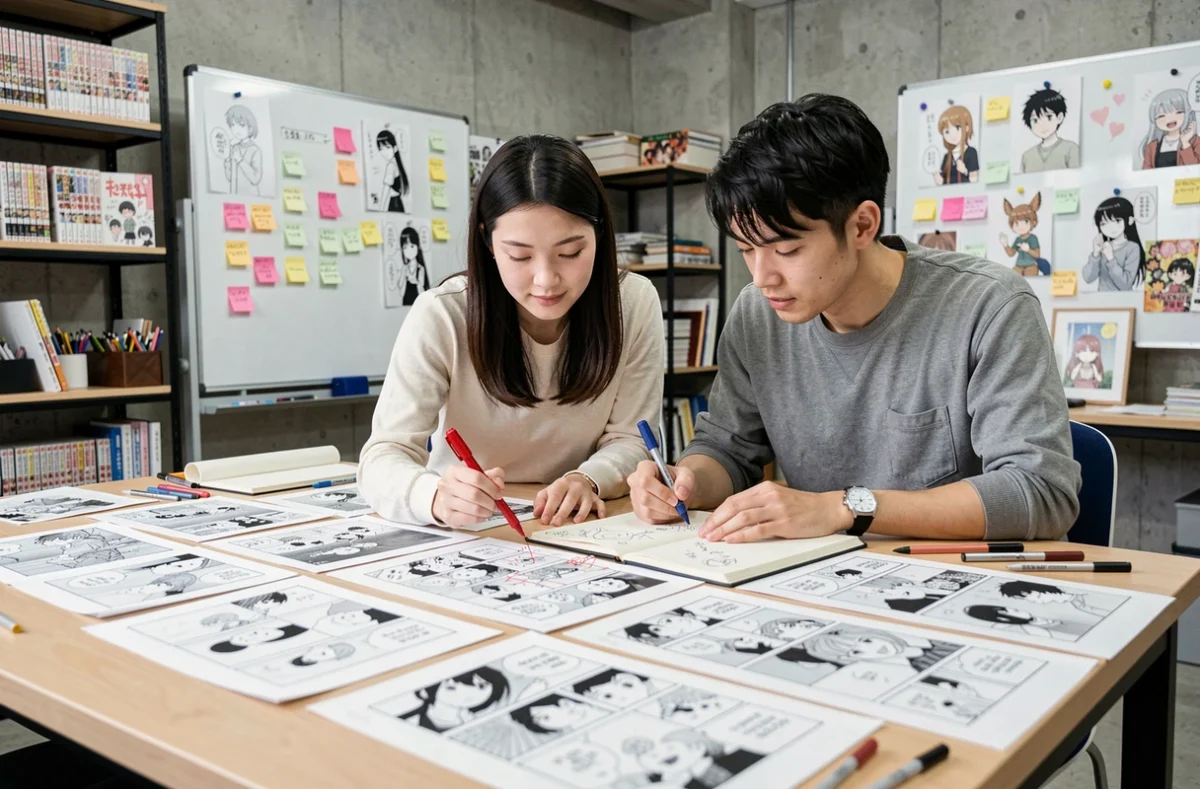
The script is as important as the drawing. A clear concept that can be summarized in two sentences attracts more than a poorly synthesized complex plot. Publishers receive hundreds of submissions. If the pitch doesn’t hook immediately, the manuscript won’t be read.
A submission dossier generally includes:
- A one to two-page synopsis presenting the universe, the main conflict, and the arc of the central character
- Character sheets with their design, their role in the story, and some distinctive personality traits
- A complete pilot chapter (often between 30 and 50 pages), inked and dialogued, that shows the tone and rhythm of the project
- A note of intent explaining the target audience (shonen, seinen, shojo) and the positioning relative to existing titles
The choice of genre guides the entire project. A shonen manga aimed at teenagers is not constructed like a seinen for adults, neither in narrative rhythm nor in themes addressed. Choosing your genre before starting avoids rewriting dozens of pages.
Publishing first online (on webmanga platforms or through a dedicated blog) allows testing the project’s reception and building a community of readers. This existing readership becomes an asset when approaching publishers, especially in a market where publishers seek to limit commercial risk.
The path to becoming a mangaka is not just about perfecting your drawing skills. Knowledge of the market, the ability to create a coherent editorial dossier, and staying updated on industry developments (including AI) are part of the job just as much as drawing. Producing regularly, accepting criticism, and adjusting your project based on feedback remain the most concrete levers for progress.