
When setting up a workstation in a rural town hall or configuring a server for an SME, we handle components that all fall under the umbrella of IT, without always realizing the full extent of the term. IT refers to the automatic processing of information by programmable machines. It encompasses hardware, software, networks, data, and their security.
IT Compliance: The Project That Classic Definitions Overlook
On the ground, the first challenge is no longer getting software to run; it’s proving that it runs according to the rules. IT compliance has become a structured field, at the intersection of law and cybersecurity. We talk about aligning systems with frameworks like GDPR or PCI-DSS.
In practical terms, this means mapping personal data flows, documenting access, and verifying encryption. For a local authority or an accounting firm, this work takes as much time as the technical deployment itself. Ignoring this layer exposes one to financial penalties, as well as service interruptions in the event of an unfavorable audit.
Useful resources to understand these issues can be found on the IT page of Wiki Dark, which gathers definitions and overviews of sub-disciplines.
Hardware and Software: Two Indissociable Layers
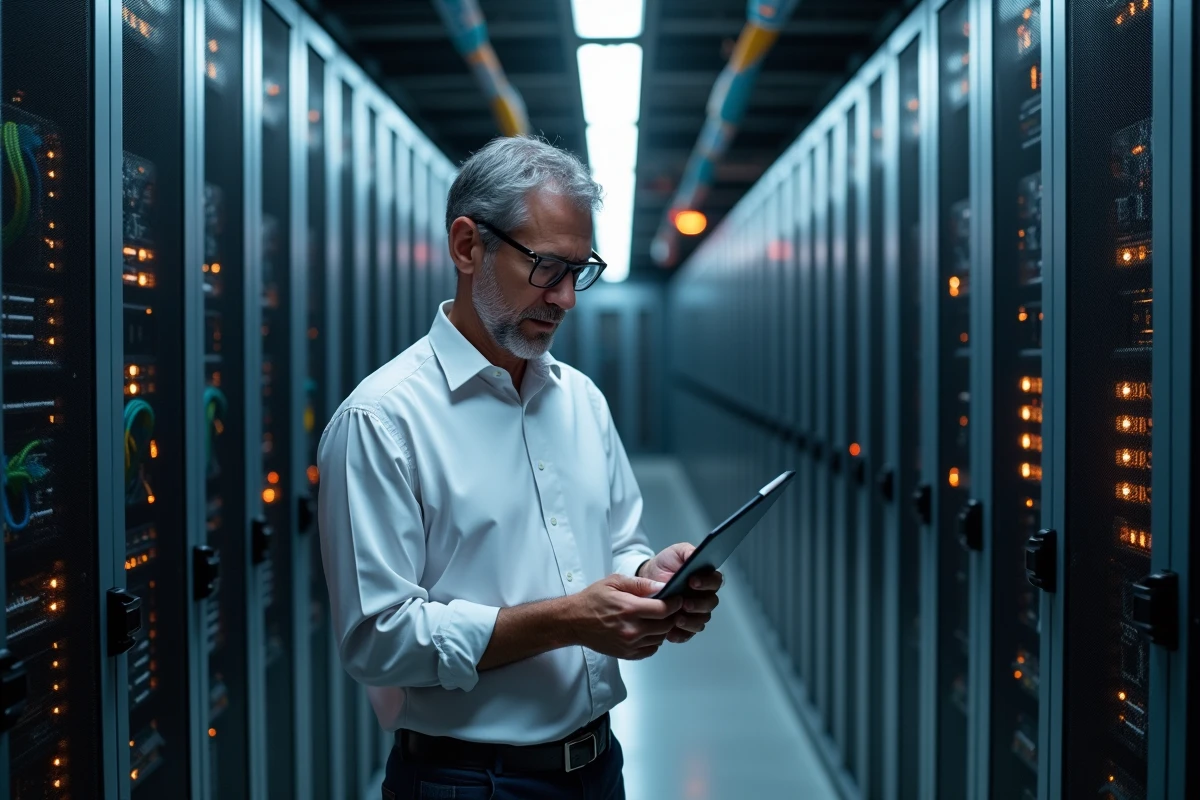
A computer without an operating system is an assembly of inert components. Hardware (processor, RAM, storage) provides the raw computing power. Software (operating system, applications, drivers) translates human instructions into operations that the machine executes.
This distinction may seem elementary, but it structures all purchasing and maintenance decisions. When choosing a workstation for computer-aided design, one first sizes the processor and graphics card, then selects compatible software. Hardware conditions software, and software justifies hardware.
Algorithm and Source Code: The Invisible Foundation
Behind every piece of software lies an algorithm, which is a sequence of logical instructions that solves a given problem. The algorithm is translated into source code, written in a programming language (Python, C, Java, among others). This code is then compiled or interpreted to become an executable program.
A poorly designed algorithm can slow down an entire system, even on high-performance hardware. That’s why developers spend more time optimizing logic than adding lines of code.
Networks and Digital Systems: Connecting Machines Is No Longer Enough
Plugging in an Ethernet cable or configuring a Wi-Fi access point is the visible part. The critical part is what flows over the network and how it is protected. A computer network connects computers, servers, and connected objects, allowing them to exchange data.
- The TCP/IP protocol structures communication between machines, regardless of the manufacturer or operating system used.
- Firewalls and intrusion detection systems filter incoming and outgoing traffic to block unauthorized access.
- Data encryption in transit (TLS, VPN) prevents the interception of sensitive information on public or shared networks.
Cybersecurity is no longer an afterthought; it is considered from the design of the network. Feedback on this point varies depending on the size of the organization, but the principle remains the same: segment, monitor, encrypt.

REEN Law and Sustainable IT: What Changes in Practices
The REEN Law (Reduction of the Environmental Footprint of Digital Technology), gradually coming into effect since 2022, concretely changes how IT systems are designed and used in France. Large local authorities must now define a responsible digital strategy.
On the ground, this translates into three areas of work:
- Extending the lifespan of equipment, prioritizing repair and refurbishment over systematic replacement.
- Rationalizing data centers, with objectives for reducing the carbon footprint of digital technology integrated into the roadmaps of IT departments.
- Eco-design of online services, which involves limiting page weight, reducing server requests, and optimizing code to consume fewer resources.
These regulatory obligations affect both the architecture of systems and software development choices. An eco-designed website loads faster, costs less in hosting, and offers a better user experience. Sustainable IT aligns with operational interests.
Artificial Intelligence and Data Processing: Where Do We Really Stand?
Artificial intelligence relies on algorithms capable of learning from data without being explicitly programmed for each task. We talk about machine learning when the system improves its performance over the data it processes.
In practice, AI is already present in common tools: anti-spam filters, voice assistants, autocomplete suggestions, fraud detection. What has changed in recent years is the available computing power and the volume of usable data, which have allowed for training much more complex models.
AI does not replace traditional IT infrastructure; it overlays it. A language model needs servers, networks, storage, and software to function. Without a solid IT foundation, no artificial intelligence application can sustain production.
IT remains a science of information processing, but its contours are shifting. Regulatory compliance, environmental footprint, and the integration of AI into existing systems now form the three fronts on which technical teams focus their efforts daily.