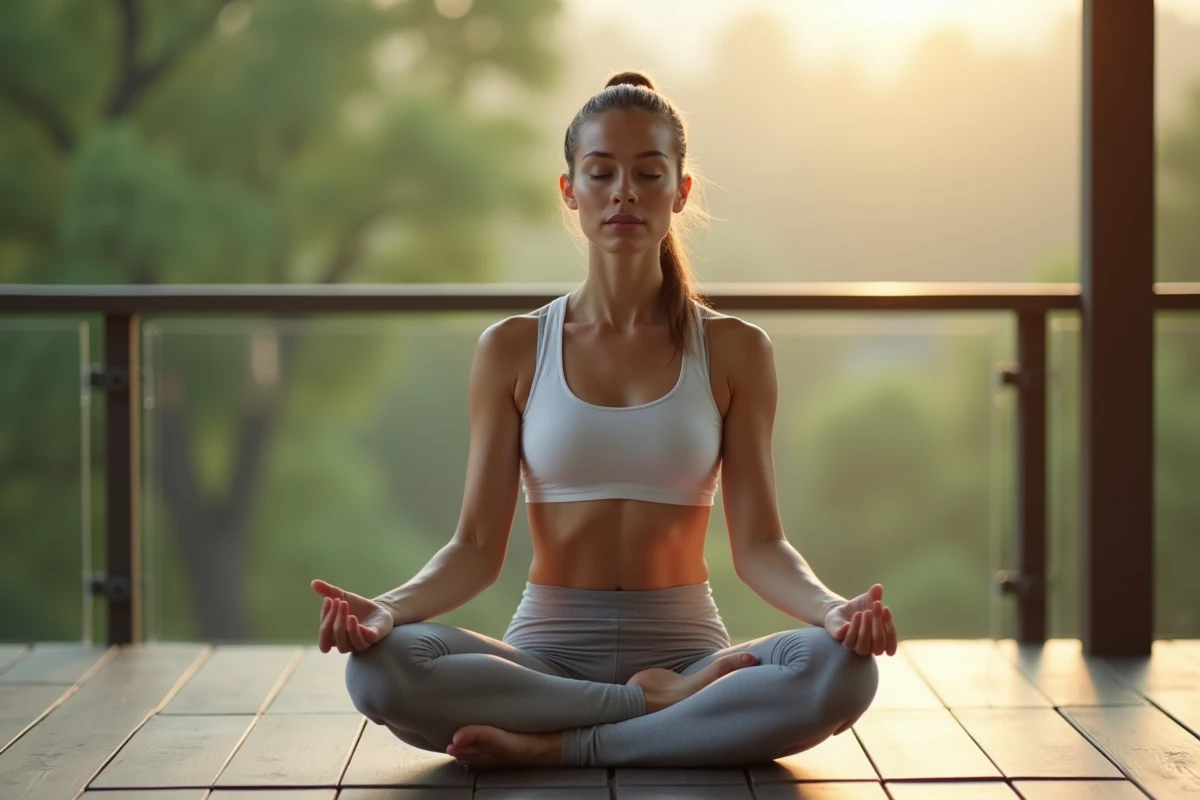
Well-being is not just a list of good resolutions made in January and forgotten by March. It relies on concrete, often discreet adjustments that change the quality of a day without requiring a complete life overhaul. Improving daily well-being is less about major changes and more about repeated actions tailored to what the body and mind truly need.
Digital hygiene and information overload: the underestimated lever
Have you ever noticed that diffuse fatigue after an hour spent scrolling through a news feed? It’s not laziness. Information overload is as exhausting as lack of sleep.
Since 2023, the national strategy “Mental Health and Psychiatry” 2023-2027 in France places digital hygiene on par with sleep and physical activity as levers for well-being. Official recommendations have thus evolved: limiting notifications, reducing screen time, and controlling exposure to social media are now recognized health actions, not just common-sense advice.
Specifically, turning off non-priority alerts on your phone during meals and the first hour after waking changes the tone of an entire day. You can find information on lecoindubienetre.fr that details this type of approach focused on balancing connected life and mental recovery.
A common trap: replacing scrolling with another form of stimulation (podcast, video, game). The goal is not to fill the void but to give the brain time without stimulation. A few minutes of silence or a gaze out the window is enough.

Natural light upon waking: a simple biological adjustment
Updated research in chronobiology in 2023 (notably in The Lancet Healthy Longevity) confirms that exposure to natural light within the hour after waking improves mood, alertness, and the quality of sleep the following night. This is not generic advice on light therapy: it is a specific mechanism related to the circadian rhythm.
The explanation can be summed up in one sentence: morning light resets the internal clock and slows melatonin production at the right time. In the evening, falling asleep becomes easier.
To benefit from this, there’s no need to rush outside at six in the morning. Opening the shutters wide, having coffee near an east-facing window, or walking to the bakery already serves this purpose. The body needs sunlight, not intense artificial lighting.
Why the phone screen does not replace the sun
The blue light from a screen lacks both the spectrum and intensity of natural morning light. It stimulates alertness without synchronizing the biological clock. Checking your phone in bed in the morning gives the illusion of being awake but delays the true signal for the body to start up.
Micro-gratitudes: writing less to sustain longer
Research published in 2023 in the Journal of Positive Psychology shows that noting a single sentence of gratitude per day is maintained longer than a detailed journal, with comparable benefits for mental well-being. The idea is not to write a page every evening but to capture a positive fact in one line.
Concrete examples of micro-gratitudes:
- A pleasant exchange with a colleague during a break, noted in six words on the phone
- The taste of a successful dish, described in one sentence in a notebook on the nightstand
- A pleasant physical sensation (warmth of the sun on the skin, stretching after a walk) mentally recorded before sleeping
The short format removes friction. People who abandon gratitude journals rarely do so due to lack of motivation: they find the exercise too long or too formal. Simplifying the task to one sentence changes the adherence rate.

Micro-practices of mindfulness integrated into daily gestures
Since 2023, a report from the American Psychological Association documents a decline in the daily use of guided meditation apps. This decline does not reflect a disinterest in mindfulness but a shift towards shorter, more spontaneous practices.
Rather than blocking twenty minutes for a seated session, more and more people are integrating mindfulness into gestures already present in their day:
- Breathing slowly three times between two work tasks, with hands flat on the desk
- Walking while paying attention to the sensations of the feet on the ground during a usual route
- Taking a shower while focusing solely on the water temperature and contact with the skin
These micro-practices require no app, no equipment, and no dedicated time slot. They transform an automatic gesture into a moment of mental recovery. Well-being resides in the attention given to what we already do, not in adding an extra activity.
When the shower becomes a mindfulness exercise
The mindful shower illustrates the principle well. For two to three minutes, you plan nothing, you don’t review the day. You feel the water, the foam, the warmth. This sensory refocusing cuts off the flow of anticipatory thoughts that fuel stress.
Improving daily well-being does not rely on a rigid protocol. Each gesture described here (morning light, digital break, gratitude sentence, sensory attention) affects a different dimension: biological rhythm, mental load, emotional state, quality of presence. Combining them according to your own constraints produces a cumulative effect that major lifestyle upheavals often struggle to achieve.