
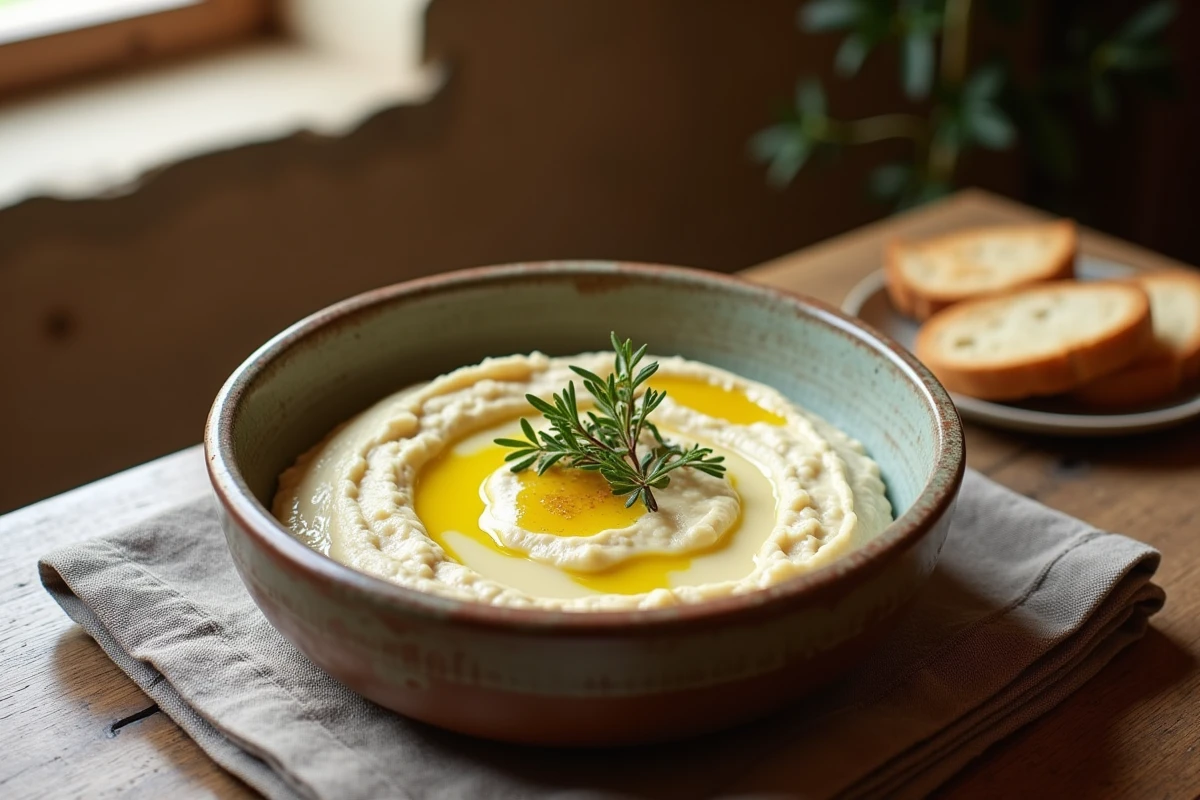
The Nîmes brandade refers to an emulsion of desalted cod, olive oil, milk or cream, and garlic, worked until it reaches a texture close to mousse. The term comes from the Provençal “brandar,” which means to stir, in reference to the pounding gesture in a mortar that historically defines this preparation.
Nîmes brandade without potato: the technical framework set by Michel Sarran
The debate about the composition of Nîmes brandade is not new, but Michel Sarran publicly settled it during several television appearances and masterclasses between 2022 and 2024. His position is clear: the true Nîmes brandade does not contain potato.
For the chef, a brandade that incorporates potato becomes a cod gratin. The distinction is not cosmetic. It affects the final texture of the dish. Without potato, the preparation relies entirely on the emulsion between the cod flesh, olive oil, milk (or cream), and garlic. The result is almost mousse-like, light, with a more pronounced fish flavor.
The recipe for Nîmes brandade according to Michel Sarran is based on this strict foundation, where the mechanical work of the cod replaces the addition of starch. The success then depends on the rhythm of incorporating the olive oil, poured in a thin stream while the cod is vigorously stirred, exactly like making mayonnaise.
IGP Nîmes brandade: a regulatory specification often ignored
Most recipe articles refer to “cod brandade” without distinguishing the generic version from the Nîmes brandade protected by a European IGP. This Protected Geographical Indication, validated by the INAO and the European Commission, imposes precise criteria.
The specifications define a minimum percentage of fish, the use of salted and dried cod (not simply frozen), a mandatory portion of olive oil in the fats, and production within a geographically defined area around Nîmes.
This regulatory framework explains why industrial brandades sold in supermarkets under the name “Nîmes brandade” cannot contain just anything. In contrast, a “cod brandade” without geographical mention is not subject to any of these constraints. The difference on the label is subtle, but the gap in taste and composition can be considerable.
What the IGP does not say about potato
A point often misunderstood: the IGP Nîmes brandade does not formally prohibit potato. Some industrial versions compliant with the label contain it. Michel Sarran’s position therefore goes further than the regulatory framework. He defends a tradition predating the IGP, that of a pure emulsion without starch, which was the norm before potato became convenient in public versions.
Desalted cod for brandade: the preparation that conditions the entire dish
The quality of the brandade is determined even before cooking. The desalting of the cod is the longest and most crucial step. Poorly conducted desalting results in a dish that is either too salty or bland and watery.
- Choose thick pieces of salted and dried cod, with as few bones as possible. The flesh should be firm, white to slightly ivory, never yellowish.
- Soak the cod in a large volume of cold water and change this water at least three times over an extended period. The fish should remain in the refrigerator throughout the process.
- Test the salt level by tasting a small piece poached quickly. The cod should remain flavorful without being overly salty.
- Then poach the cod at a simmer (never at a rolling boil) in milk with a crushed garlic clove, thyme, and possibly a bay leaf. This poaching deeply flavors the flesh.
Poaching in milk rather than water is what distinguishes a rich brandade from a dry version. The milk adds fat and roundness, and then facilitates the emulsion with olive oil.
Emulsion technique: olive oil, milk, and the mortar gesture
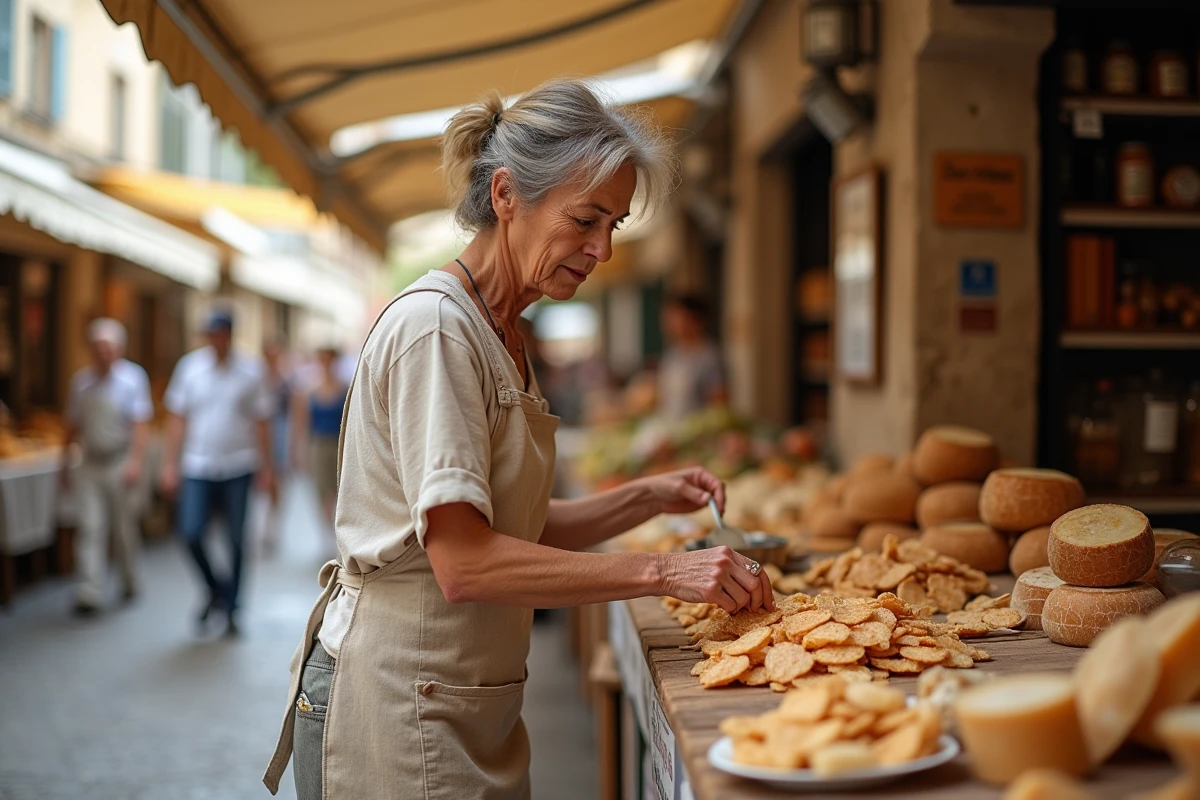
Once the cod is poached and drained, it is flaked by hand to remove all bones and skin. The flesh is then worked in a mortar (or with a wooden spatula in a saucepan over very low heat) while alternating thin streams of olive oil and spoonfuls of warm poaching milk.
The classic trap is to go too fast. Pouring too much oil at once breaks the emulsion. The result becomes oily and grainy instead of smooth and airy. Olive oil is incorporated in a thin stream, like for an aioli.
Garlic plays a structural role beyond aroma. Crushed into a paste and gradually incorporated, it helps bind the mixture. Some add a hint of lemon juice at the end of preparation to enhance flavors and stabilize texture, but this addition divides purists.
Serving Nîmes brandade: hot, warm, or gratin
The version most faithful to tradition is served warm, simply accompanied by garlic-rubbed croutons. The trend of baking it with a layer of grated cheese is again more akin to cod gratin than to brandade in the strict sense.
For a complete meal, a green salad dressed with olive oil and lemon, some black olives, and freshly chopped parsley are sufficient. Nîmes brandade stands on its own when the emulsion is successful: creamy, fragrant, with that mousse-like texture that melts on the tongue without any potato pieces to weigh down the structure.