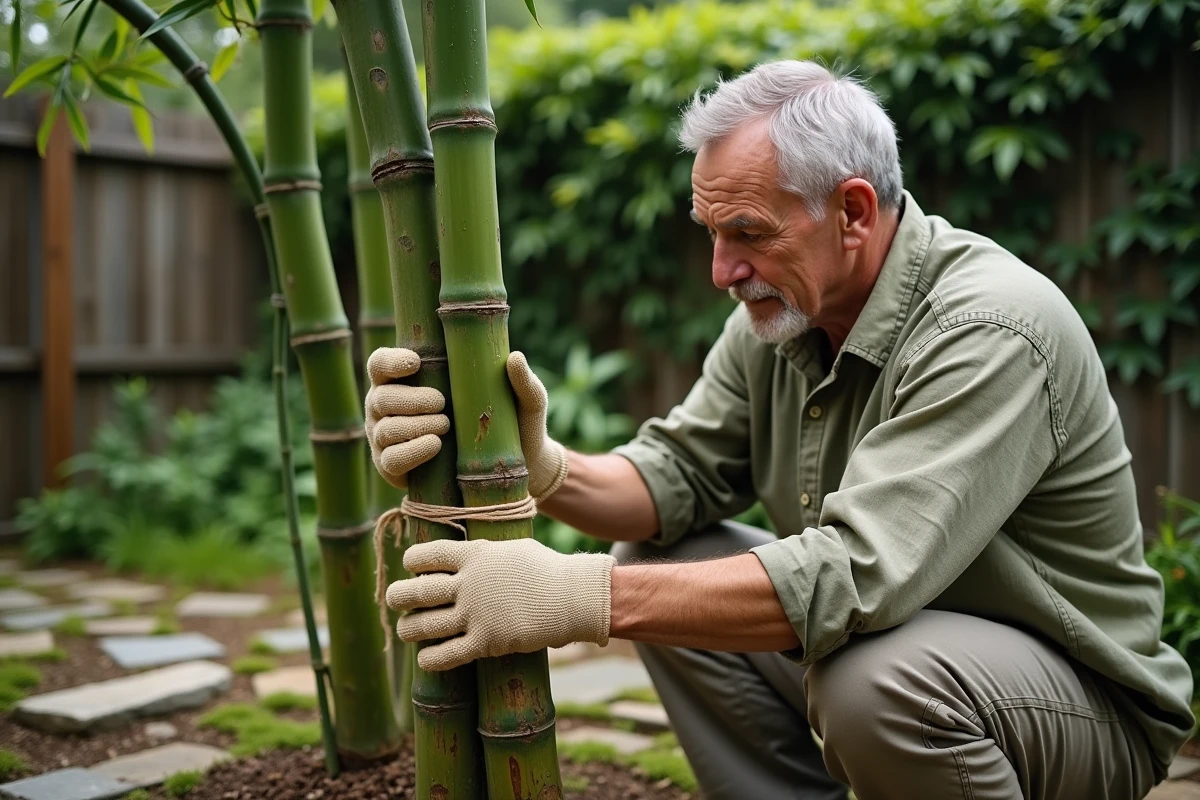
Fixing bamboo to the ground in a garden is not just about planting canes in the soil. Dry bamboo, used as a building material for screens, trellises, or borders, has no roots to anchor itself. Without an appropriate fixing system, the wind and the weight of climbing plants are enough to topple the structure. The fixation relies on two principles: mechanical anchoring in the ground and the binding of the canes to each other.
Understanding how to fix bamboo to the ground requires distinguishing between situations: an isolated vertical post, a horizontal trellis resting directly on the ground, or a complex assembly like a lightweight pergola. Each configuration requires a different technique.
Vertical anchoring of bamboo canes: stakes and sleeves
The majority of garden projects start with bamboo canes planted vertically: posts for screens, reinforced stakes, lightweight pergola posts. The most common mistake is driving the cane directly into the ground. Dry bamboo rots when in prolonged contact with soil moisture, and the cane eventually splits at its base.
A metal sleeve protects the base and prevents rotting. This is a tube made of galvanized steel or aluminum, driven into the ground, into which the bamboo cane is inserted. The sleeve isolates the bamboo from direct moisture. For smaller diameter canes, steel pegs or deep-driven fixing stakes serve a similar role.
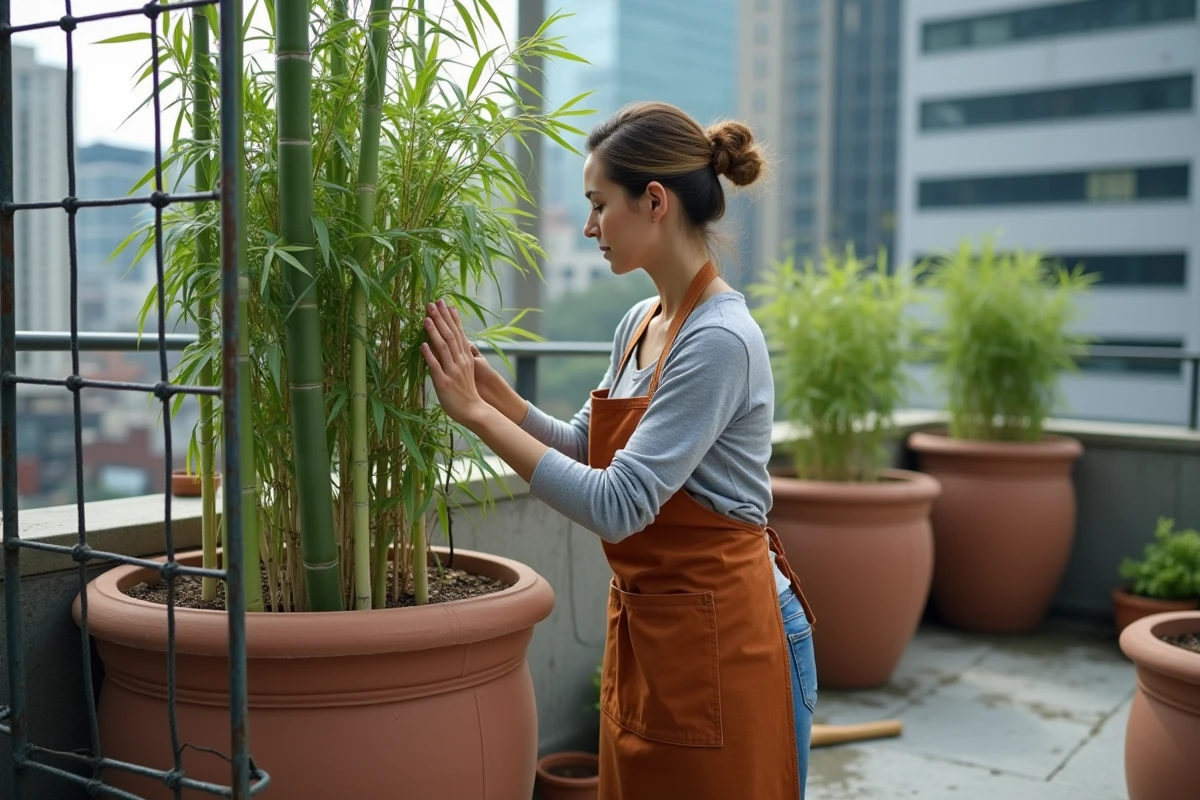
The depth of the stake or sleeve determines wind resistance. The taller the structure, the deeper the anchoring must be. For a modestly tall screen, driving the sleeve to a depth equivalent to a quarter of the total height of the cane provides good stability. In loose or sandy soil, this depth should increase.
Drilling bamboo without splitting it
Fixing a cane to a stake or sleeve sometimes requires drilling a hole in the bamboo section. The difficulty arises from the fibrous structure of the material: poorly executed drilling can cause a longitudinal crack that weakens the entire cane.
- Use a wood bit with a diameter slightly smaller than the bolt or screw intended, drilling at a moderate speed without forcing
- Always drill at a node (the swollen part between two internodes), as the fibers there are denser and better resist splitting
- Place a piece of adhesive tape over the drilling area to hold the surface fibers and limit chipping
A well-placed hole at the node allows bolting the cane to the metal stake with a wide washer, which distributes the pressure over the surface of the bamboo.
Horizontal fixation: bamboo laid on the ground for borders and trellises
Bamboo canes used as borders for flower beds or as a base for trellises in the vegetable garden lie horizontally on the ground. Their fixation presents a different problem: they must remain in place despite repeated foot traffic, watering, and runoff.
U-shaped metal brackets driven on either side of the cane are the most reliable method. These brackets, similar to those used to secure fencing, are driven into the ground and hold the cane down without piercing it. The spacing between two brackets depends on the nature of the soil: in loose soil, tightening the fixing points prevents the cane from lifting.
For decorative borders made of split bamboo rolls, the technique differs. The roll is unrolled along the flower bed and then held in place by wooden or steel stakes planted against its inner face. The stake prevents the roll from tipping outward under the pressure of the soil.
Binding the canes together: lashing and netting
Fixing bamboo to the ground is not enough if the canes are not connected to each other. A cohesive assembly distributes wind stresses across the entire structure instead of stressing each cane separately. There are two complementary approaches.
Lashing with rope
Lashing involves tying two canes (perpendicular or parallel) with a rope wrapped in a cross pattern. The starting knot is made on the first cane, then the rope alternates around the two sections before being tightened with friction turns. This traditional technique works well for lightweight structures like crossed stakes or small screens.
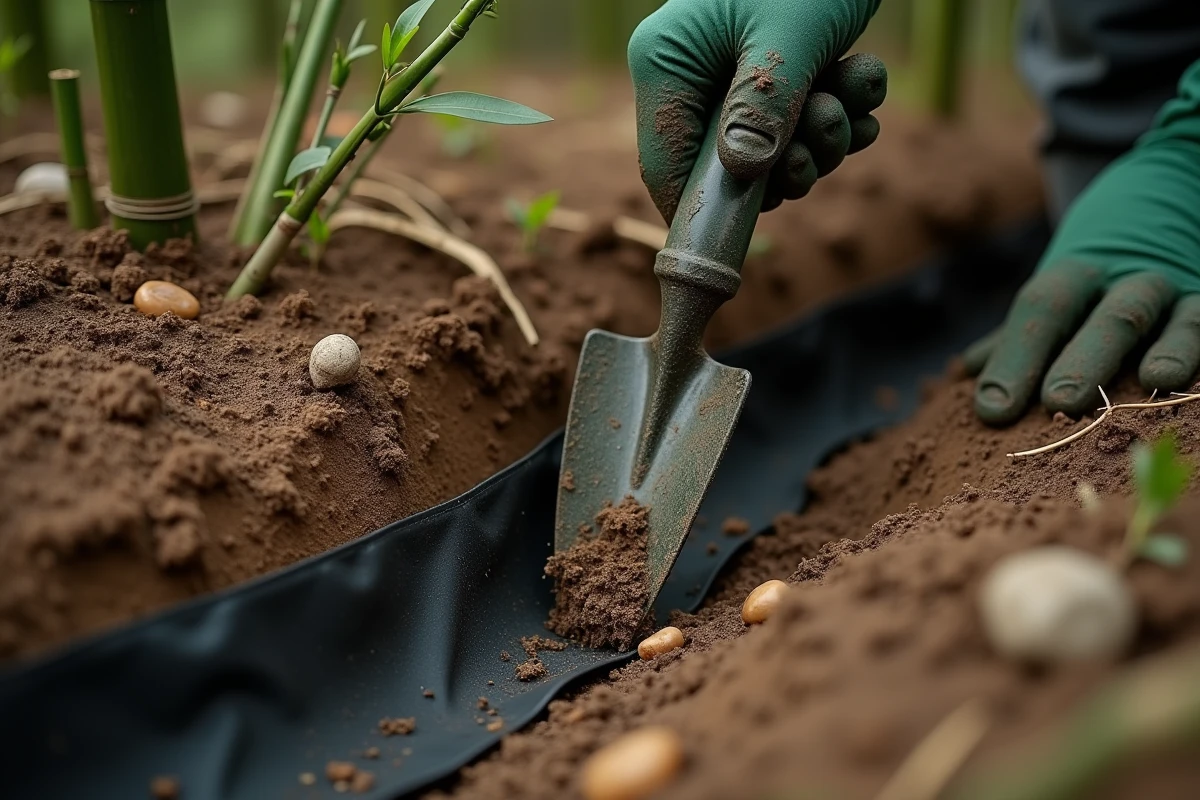
The rope should be made of UV-resistant synthetic fiber (polypropylene, for example) if the structure remains outdoors all year round. A natural fiber rope provides a more aesthetic finish but degrades faster in the rain.
Combining bamboo and netting for trellises
For vegetable garden trellises intended for peas or climbing beans, stapling a flexible net or mesh onto a frame of canes anchored to the ground enhances overall rigidity. The net prevents the canes from spreading apart when the vegetation becomes heavy. Trellises made of isolated canes without connection tend to bend or collapse once covered with stems.
The supporting frame (two vertical posts and one horizontal crossbar, all made of bamboo) is fixed to the ground by sleeves or stakes. The net is then tensioned and attached to the canes with collars or ties. This combination provides a lightweight structure, removable at the end of the season, and stable enough to support the weight of the plants.
Common mistakes that weaken the fixation of bamboo to the ground
Some flaws consistently appear in bamboo installations in the garden:
- Driving the cane directly into the ground without a sleeve or protection, which accelerates the rotting of the base within a few seasons
- Drilling the sections between two nodes, where the fiber is weakest, instead of drilling at the node
- Using a drill bit diameter that is too large compared to the bolt, which leaves play and allows the cane to pivot in the wind
- Neglecting the anchoring depth of the stakes, especially in sandy soil or after recent plowing
Undersized anchoring is the primary cause of tipping of bamboo structures in the garden. It is better to drive the stakes deeper than necessary than to have to redo everything after the first storm.
The choice of fixing system primarily depends on the function of the structure and its exposure to the wind. A low border in a sheltered area simply requires metal brackets. An exposed screen in full wind demands deep sleeves, drilling at the node, and rigorous lashing between the canes.