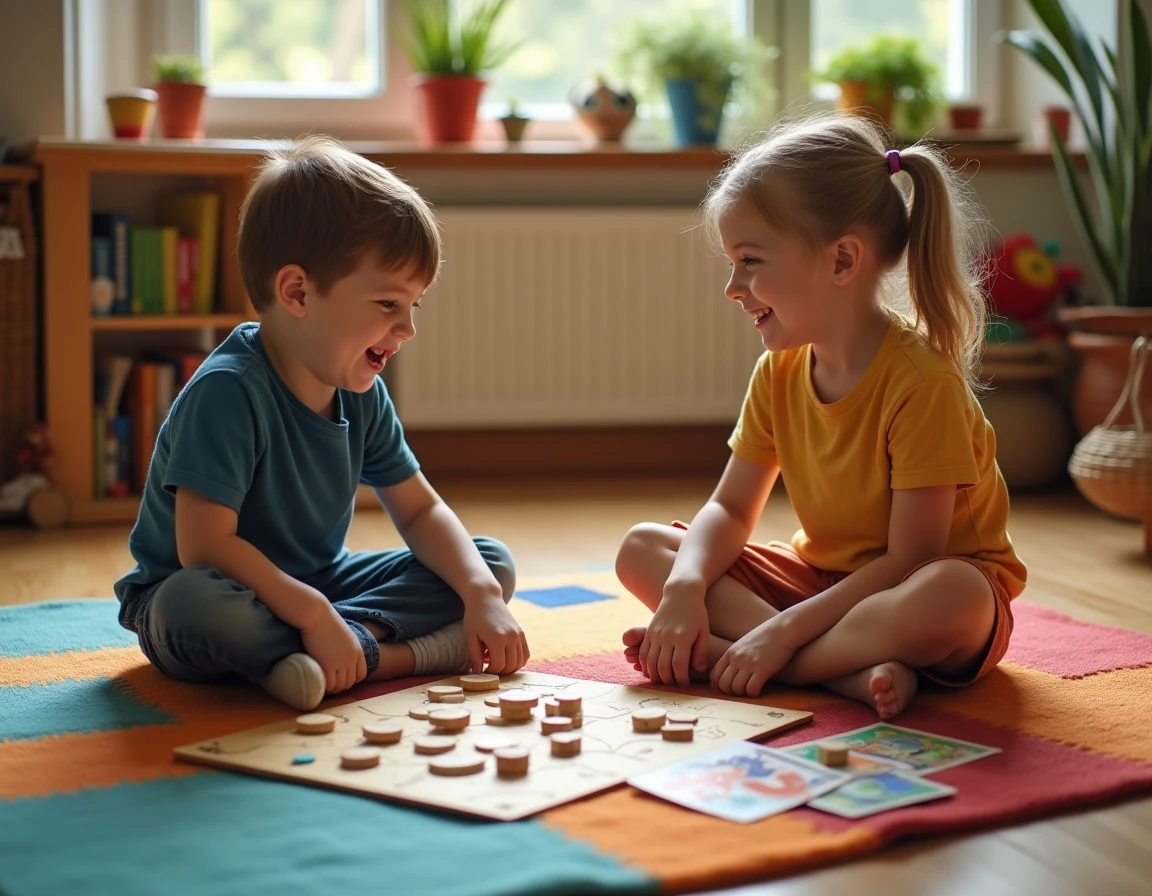
A game offered at the wrong time produces the opposite effect of what is sought: agitation, frustration, abandonment in less than three minutes. The key is not the quantity of playful activities available, but their suitability to the child’s energy level at a given moment. Here we discuss concrete levers to structure games and activities in daily life, going beyond simple catalogs of ideas.
Playful micro-routines and emotional regulation in children

Childcare professionals have been using short play sequences for several years, positioned at transition moments: returning from school, before homework, before bed. These playful micro-routines target emotional regulation, not pure entertainment.
The principle is based on a predictable sequence. The child knows that after snack time, there are five minutes of calm play (free drawing, modeling clay, riddles). This predictability reduces resistance to the following transitions, particularly homework or bath time.
Three formats work particularly well depending on age:
- Between 3 and 5 years: mimicking emotions (anger, joy, surprise) with the body, then naming each emotion together. The activity lasts two to three minutes and engages both gross motor skills and language.
- Between 6 and 8 years: breath games (moving a ping-pong ball across the table by blowing), which activate the parasympathetic system and lower the level of nervous excitement.
- From 9 years: a logical riddle or a mini-verbal challenge (finding five words starting with the same syllable) that channels attention without creating competition.
Toy ranges designed by age group facilitate this targeting by associating each support with a specific skill. Those offered on the Ouaps website for children illustrate this segmentation logic well.
Screen-free games structured by developed skill
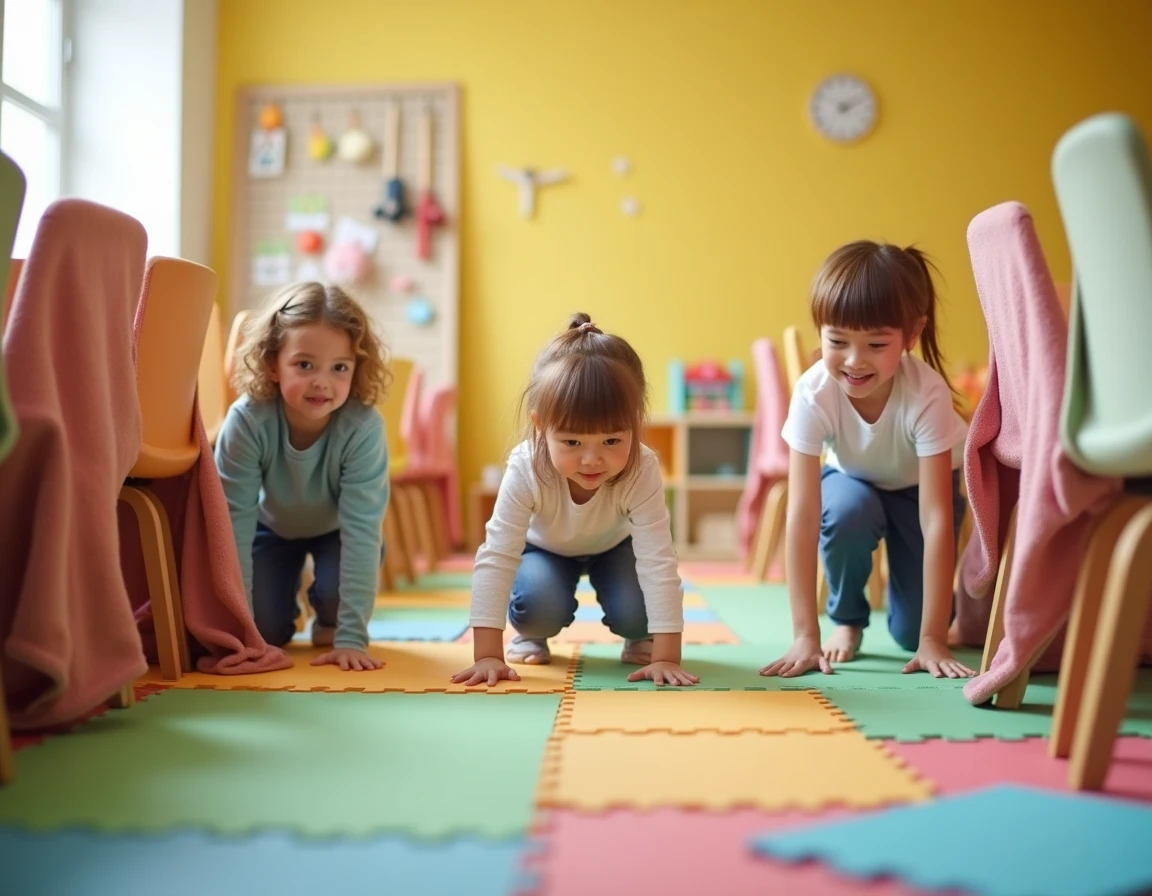
Listing activities by theme (cooking, outdoor, crafts) remains the dominant reflex of parenting guides. The classification by theme masks imbalances. Classifying games by the skill being worked on allows for varied stimulation and avoids repetition.
Executive functions: inhibition, working memory, flexibility
The classic “Simon Says” works on inhibition (not moving when the instruction does not start with “Simon says”). The endless sentence game, where each player repeats the sequence and then adds a word, increasingly engages working memory.
For cognitive flexibility, the game “neither yes nor no” forces the child to reformulate in real time, activating the prefrontal cortex. These three games require no materials and can be integrated into a car ride or a waiting line.
Fine motor skills and coordination
Manual activities such as cutting, gluing, or modeling are often proposed as occupations. Their real value lies in strengthening the thumb-index grip and hand-eye coordination. A 4-year-old cutting curved shapes prepares their writing gesture.
Folding (simple origami) adds a dimension of spatial planning absent from coloring. Children who regularly practice folding manage multi-step instructions better.
Cooperation and language
The exquisite corpse game, where each participant writes part of a sentence without seeing the previous ones, simultaneously develops syntax and acceptance of the unexpected. For younger children, the telephone game works on auditory discrimination and reformulation.
A cooperative game each day reduces sibling conflicts noticeably within a few weeks. The mechanism is simple: the child associates the presence of their brother or sister with a shared positive experience, not with competition for parental resources.
Birthday and group activities: adapting difficulty to the group
Organizing a birthday party or group activity with children of mixed ages poses a specific problem: the level of difficulty must satisfy the older ones without excluding the younger ones.
The treasure hunt remains the most requested activity for a birthday. Its success depends on calibrating the clues. Two concrete rules work:
- Create mixed pairs (an older child with a younger one) rather than teams by age. The older child reads the clue, the younger one searches physically.
- Alternate textual clues and visual clues (photos, drawings, pictograms) so that each player contributes according to their abilities.
- Limit the duration to twenty-five minutes. Beyond that, concentration drops and team conflicts arise.
For group games like relays or obstacle courses at home, adapting the course into two versions (a simple path, a path with additional obstacles) allows each child to play at their own pace without slowing down the group.
Sustainable anti-screen strategies for vacations and daily life
Replacing screens with occasional manual activities is not enough. Structured movements like “10 days without screens” emphasize the need for repeatable daily rituals, not exceptional events.
The principle of the “family screen contract” formalizes screen-free slots and associated alternative activities. The child does not experience deprivation; they choose from a pre-established menu of activities. This menu benefits from being co-constructed: the child who participated in choosing the games invests in them more.
During vacation periods, the temptation to fill every minute with an activity produces the opposite effect. A moderate period of boredom (twenty to thirty minutes without a proposal) stimulates autonomous creativity. The parent’s role is then to provide accessible materials (sheets, crayons, cardboard, string) without directing the activity.
Families that keep an “activity journal” (a simple notebook where the child draws or pastes a memory of their game of the day) notice a better appropriation of playtime over time. The child spontaneously returns to the activities they have documented.
The question is never about finding more game ideas for children, but about structuring the existing ones around specific moments and identified skills. A repertoire of five well-placed activities throughout the day meets more needs than a list of fifty ideas without a framework.