
Accidents of daily life, fires, electrical risks, or vulnerabilities related to connected objects represent a much broader set of threats than just burglary. Improving home security starts with a realistic assessment of everyday risks, followed by targeted measures that require neither a huge budget nor heavy renovations.
Cybersecurity of connected objects: the blind spot of the smart home
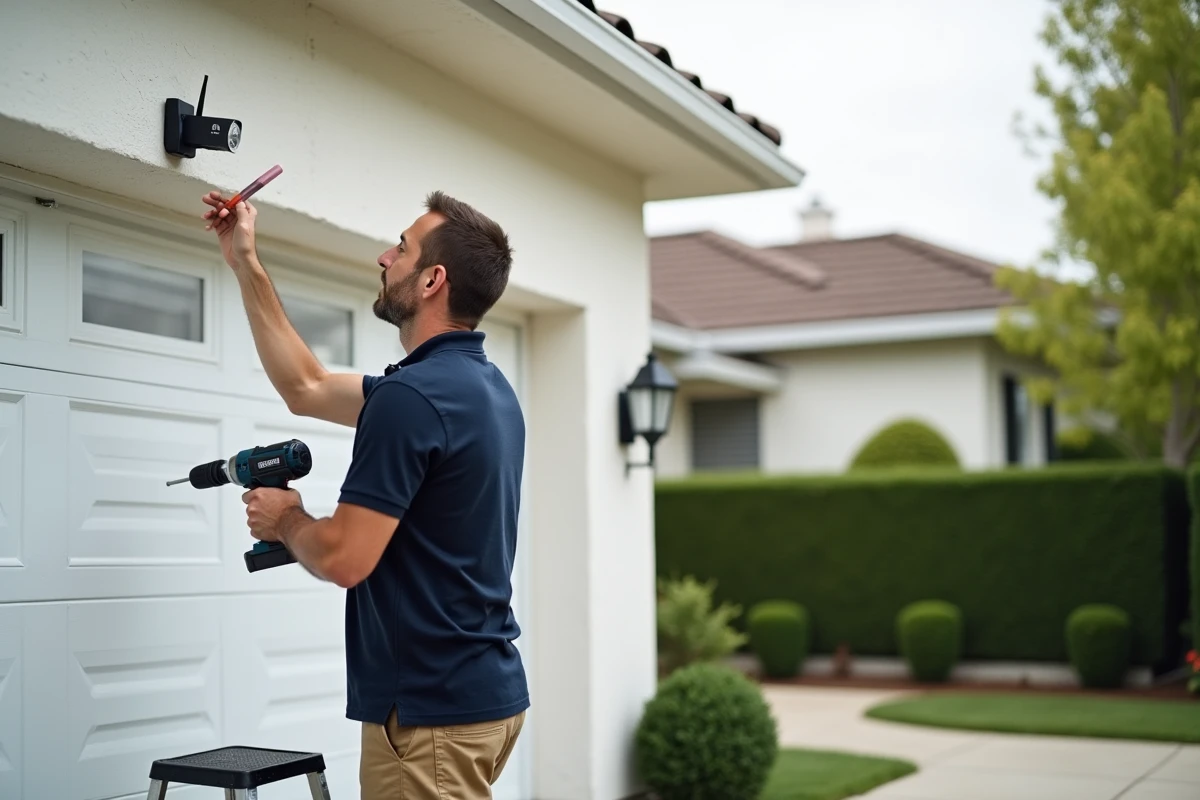
Home security systems increasingly rely on connected devices: cameras, smart locks, detectors linked to a mobile app. This rise creates a paradox. Each device added to protect the home opens up an additional digital attack surface.
A default password never changed on an IP camera, a security management app that hasn’t been updated in months, overly broad access sharing among household members: these common oversights are enough to make a security system vulnerable. Recent recommendations for home security now include account configuration and software updates as essential preventive measures.
Three reflexes reduce the majority of risks associated with home automation: systematically change factory identifiers, enable two-factor authentication when available, and limit access permissions to only those who truly need them. The communication protocols between devices (Wi-Fi, Zigbee, Z-Wave) adopted by manufacturers also have a direct impact on data protection, an aspect that the resources available on blueprintforsafety.org allow for deeper exploration in a comprehensive prevention approach.
Smoke and carbon monoxide detectors: beyond the legal obligation
The presence of a smoke detector is mandatory in every home in France. In practice, a significant portion of installed devices are outdated, poorly positioned, or equipped with used batteries. A detector whose battery hasn’t been replaced in several years protects no one.
The carbon monoxide detector remains optional in France, even though this odorless gas causes serious poisonings every year, particularly in homes equipped with gas boilers, wood stoves, or inserts. Field feedback varies on this point: some prevention professionals believe that this lack of regulatory obligation creates a false sense of security.
Positioning and maintenance of detectors
A smoke detector placed above a stove goes off every time cooking occurs and ends up being unplugged. Positioned on the ceiling, in a hallway leading to the bedrooms, it fulfills its function without false alarms. The carbon monoxide detector should be installed at breathing height, in the room where the combustion device operates.
- Test the button on each detector once a month to ensure the sound signal works
- Replace batteries at least once a year (or opt for long-lasting sealed battery models)
- Change the entire device at the end of the lifespan indicated by the manufacturer, usually around ten years
- Regularly dust the sensor grille to avoid malfunctions
Structural risks of housing: fall prevention and electrical safety
Falls are the leading cause of domestic accidents, far ahead of burns or poisonings. They do not only affect the elderly: a poorly lit staircase, an unsecured rug, or a wet floor in a bathroom can cause a fracture in a healthy adult.
Automatic lighting in night passage areas (hallways, stairs, landings) is one of the most cost-effective measures. Motion-sensor night lights, which cost just a few euros, eliminate the risk of tripping in the dark. For stairs, a solid handrail on both sides significantly reduces the risk of falling.
Electrical installation: warning signs
An outdated electrical installation multiplies the risks of fire and electrocution. Several signs should raise alarms:
- Outlets that heat up abnormally or show signs of blackening
- A differential circuit breaker that trips regularly without apparent reason
- The absence of a ground connection on circuits supplying the bathroom or kitchen
Having your installation checked by a professional every ten to fifteen years helps detect invisible defects: exposed wires in conduits, undersized cable sections for current devices, lack of differential protection on certain circuits. Real estate diagnostic professionals report that the majority of older properties show at least one anomaly during inspections.

Maintenance of combustion appliances and management of heat sources
Boilers, stoves, inserts, and gas water heaters require mandatory annual maintenance. This obligation is not just a bureaucratic formality. A poorly maintained appliance can produce carbon monoxide in dangerous quantities, without any visible or odoriferous signs.
Chimney flues must be cleaned at least once a year (twice for wood flues). Neglecting this cleaning increases the risk of flue fires, a disaster that can spread to the framework in a matter of minutes.
Managing heat sources on a daily basis is also part of prevention: never dry laundry directly on an electric resistance radiator, keep a clear space around heaters, turn off cooking plates as soon as they are no longer in use. These actions may seem trivial, but their cumulative effect measurably reduces the likelihood of a domestic fire starting.
The safety of a home is built in successive layers. No single measure is sufficient, but the combination of functional detectors, a sound electrical installation, and regular maintenance of appliances covers the vast majority of risks that a household faces daily. A detector with a dead battery or a flue that has never been cleaned negates the protection that these devices are supposed to offer.